Hydraulic Accumulator – Supplier in UAE
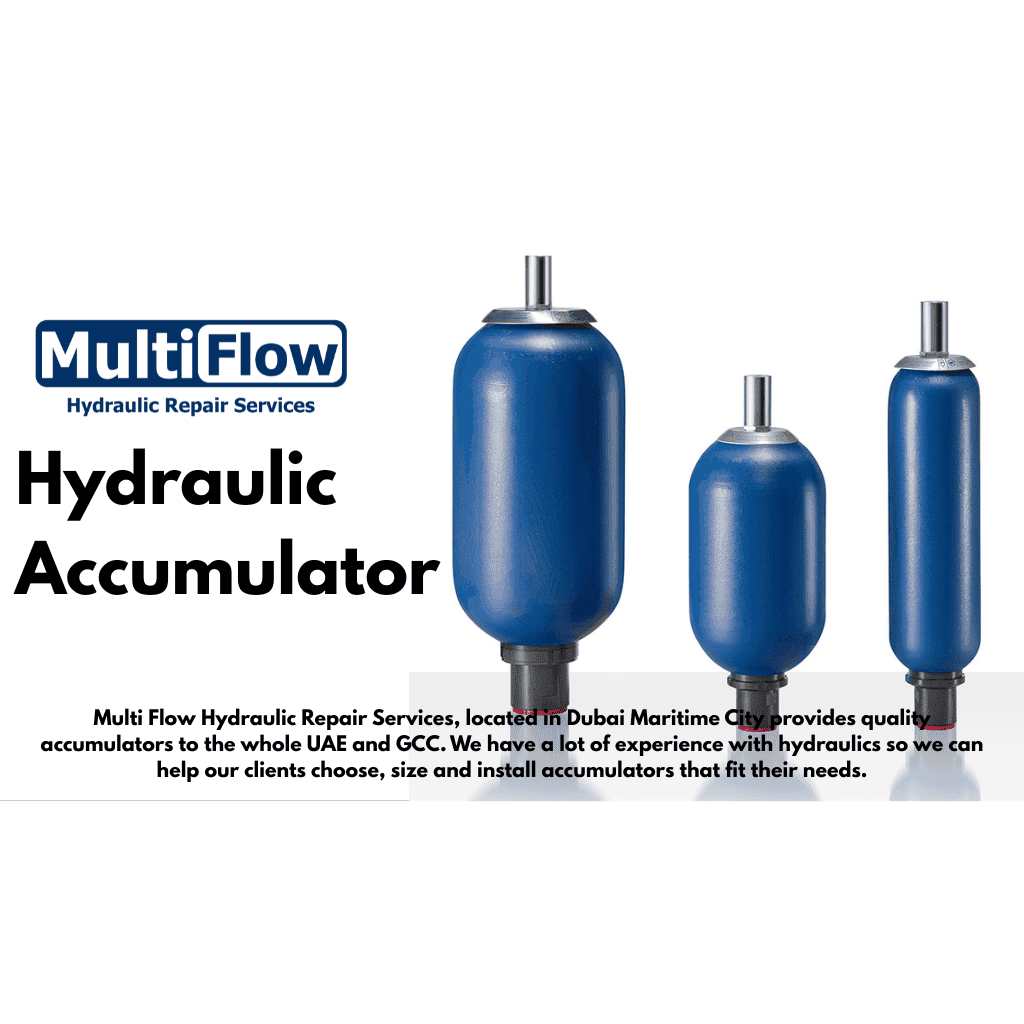
Multi Flow Hydraulic Repair Services, located in Dubai Maritime City provides quality accumulators to the whole UAE and GCC. We have a lot of experience with hydraulics so we can help our clients choose, size and install accumulators that fit their needs.
Hydraulic Accumulator – Supplier in UAE
A hydraulic accumulator is an important part of a hydraulic system. It stores energy in the form of fluid. Then it releases this energy when it is needed. In ships offshore, oil and gas and heavy industry hydraulic accumulators help keep the pressure stable absorb shocks and make the system work better.
Multi Flow Hydraulic Repair Services, located in Dubai Maritime City provides quality accumulators to the whole UAE and GCC. We have a lot of experience with hydraulics so we can help our clients choose, size and install accumulators that fit their needs.
1. What a Hydraulic Accumulator Does
A hydraulic accumulator is a device that stores pressure energy in the form of gas usually nitrogen. It has two parts: one for fluid and one for gas separated by a bag, piston or membrane.
When the system is working if the pressure in the system goes up fluid enters the accumulator and compresses the nitrogen gas. If the system needs pressure or the pressure drops the compressed gas. Pushes the fluid back into the hydraulic circuit. This helps keep the pressure stable and makes the system respond better. In terms the hydraulic accumulator is like a backup energy source for the hydraulic system.
2. Why Hydraulic Accumulators are Important in Hydraulic Systems
Hydraulic accumulators are not optional in heavy-duty systems. They do important things. They reduce pressure fluctuations from pumps. They absorb shocks when valves close suddenly. They keep the pressure steady when the pump stops temporarily. They make up for leaks inside the system. They reduce the load on pumps. They help the system work in emergency situations. Without an accumulator hydraulic systems can be unstable wear out faster and not work efficiently.
3. Types of Hydraulic Accumulators
The type of accumulator you need depends on the system pressure, fluid volume, temperature and response time.
3.1 Bladder Accumulator
The bladder hydraulic accumulator is widely used in ships and industry. It has a rubber bag that separates the fluid from the nitrogen gas. The advantages of this type of accumulator are that it responds quickly it is compact and easy to install and it absorbs shocks well. It is often used in deck systems, offshore equipment and hydraulic power packs.
3.2 Piston Accumulator
In a piston hydraulic accumulator a sealed piston separates the gas and fluid chambers. The advantages of this type of accumulator are that it is suitable for high-pressure applications it can hold a volume of fluid and the pre-charge configuration can be adjusted. It is often used in presses and large hydraulic power units.
3.3 Diaphragm Accumulator
The diaphragm hydraulic accumulator uses a membrane to separate the fluid and gas. The advantages of this type of accumulator are that it is compact and lightweight it is ideal for systems and it reduces pressure fluctuations. It is typically used in circuits.
4. Where Hydraulic Accumulators are Used
Hydraulic accumulators are installed in deck machinery, offshore oil and gas hydraulic systems, hydraulic power units, construction equipment, industrial presses, steering systems, emergency hydraulic circuits and energy and power generation systems. In ships and offshore hydraulic accumulators provide shock absorption and emergency backup support in operations.
5. Technical Selection Parameters
Choosing the accumulator and configuring it correctly are crucial for safe and efficient operation. You need to consider the working pressure, minimum operating pressure, required fluid volume discharge, nitrogen pre-charge pressure, temperature range, fluid compatibility, mounting and available installation space. If the pre-charge pressure is incorrect or the hydraulic accumulator is not sized properly it can result in reduced energy storage capacity excessive stress on the bladder, premature failure and reduced system efficiency. It is highly recommended to do engineering calculations and specify the accumulator before installation.
6. Installation and Safety Considerations
Hydraulic accumulators work under pressure. Need to be handled with care. Important guidelines include using nitrogen gas to pre-charge never using air or oxygen installing safety shut-off valves using pressure gauges to monitor and ensuring secure mounting and vibration protection. Safety is critical in ships and offshore applications.
7. Maintenance Recommendations
Regular inspections ensure the hydraulic accumulator works reliably. Maintenance procedures include testing the nitrogen -charge pressure regularly inspecting for corrosion or leaks checking connections replacing the bladder or seal when needed and inspecting the pressure relief valve. Preventive maintenance extends the hydraulic accumulators service life. Reduces unexpected system failures.
8. Why Choose Multi Flow Hydraulic Repair Services
Multi Flow supports clients across UAE and GCC with quality hydraulic accumulators, technical consultation for sizing, assistance with nitrogen pre-charge procedures, fast regional delivery, expertise in marine, offshore and industrial applications and system troubleshooting support. Our team ensures that each hydraulic accumulator is chosen based on the needs of the system not generic specifications.
A hydraulic accumulator is a component in any performance hydraulic system. When chosen, installed and maintained correctly it improves pressure stability, system safety and overall efficiency. Multi Flow Hydraulic Repair Services supports accumulators across UAE and GCC providing reliable solutions, for marine, offshore, industrial and oil and gas hydraulic systems.